


How one local authority cut vibration exposure by 95% - and repaired more roads in the process
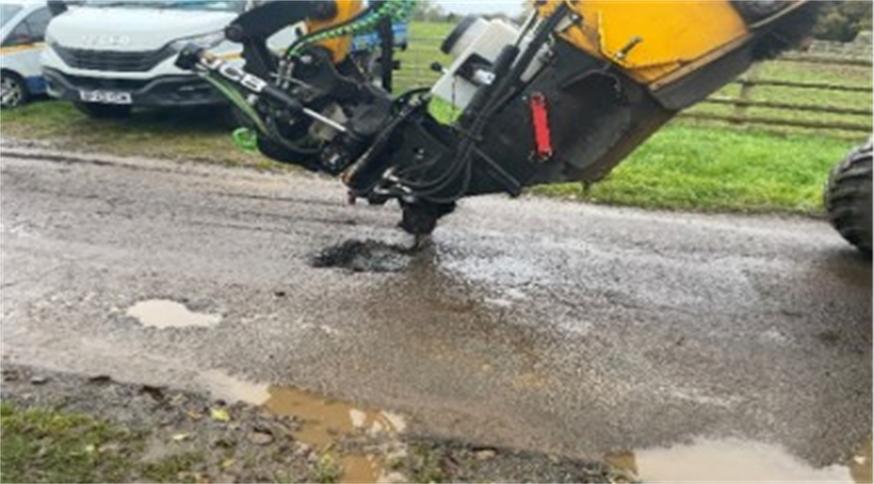
For highway maintenance teams across the UK, the challenge is familiar: repair more defects, protect workers from hand-arm vibration (HAVS), and deliver better value from limited budgets.
A recent local authority case study demonstrates that these objectives do not have to compete. By replacing traditional handheld road repair tools with an excavator-mounted repair system, the authority dramatically reduced vibration exposure while increasing the efficiency of minor road repairs.
Traditionally, pothole and carriageway repairs relied on cut-off saws, handheld breakers, and plate compactors. While effective, this approach exposed operatives to significant levels of vibration, noise, manual handling demands and dust. The authority found that repairing just a small number of potholes per day could push workers above the vibration Action Value defined by the Control of Vibration at Work Regulations.
The first step was to improve management controls. Better tool selection, job rotation, worker training, and closer supervision reduced exposure levels considerably. However, these measures also constrained productivity because the number of repairs completed in a day had to be limited.
The breakthrough came when the authority adopted an excavator-mounted road repair system equipped with specialist attachments including a road planer and breaker. This eliminated the routine need for handheld cut-off saws and breakers, leaving only low-vibration compaction equipment to complete the repair process.
The result was a step change in both health and productivity. Workers experienced lower exposure to vibration, noise, and manual handling risks, while repairs were completed more quickly with fewer operatives required on the carriageway. The authority also reported improved staff morale and greater flexibility, as the excavator could be used for a range of maintenance activities throughout the year.
Key results
| Repair method | Daily vibration exposure points | Percentage of original exposure |
| Original method (minimal controls) | >100 | 100% |
| Managed method (training, supervision, job rotation) | <60 | 19% |
| Elimination method (excavator-mounted system) | <5 | 3% |
.jpg) Why it matters
Why it matters
The real lesson from this case study is not simply that better equipment reduces vibration exposure. It shows that moving beyond management controls and eliminating the hazardous task altogether can deliver multiple benefits at once: safer working conditions, faster repairs, reduced road occupancy and better utilisation of highway maintenance budgets.
For local authority highway managers looking to improve efficiency while tackling occupational health risks, excavator-mounted repair systems offer a compelling example of how innovation can help crews fix more roads, more safely, and with fewer operational constraints. With several new vehicle mounted road repair systems available in the market, it is worth reviewing these products to see which ones could be an option, allowing for the cost of investment.
Chris Steel, Principal Specialist Inspector (Noise & Vibration) at Health and Safety Executive
Promoting excellence in public services
APSE (Association for Public Service Excellence) is a not for profit unincorporated association working with over 300 councils throughout the UK. Promoting excellence in public services, APSE is the foremost specialist in local authority frontline services, hosting a network for frontline service providers in areas such as waste and refuse collection, parks and environmental services, cemeteries and crematorium, environmental health, leisure, school meals, cleaning, housing and building maintenance.
.png)



.png)


