


New research highlights the role of soil fungi in carbon storage and land management
This article was originally published by The Conversation on 12 June 2026.
New research has highlighted the significant role underground fungal networks play in supporting ecosystems, carbon storage and sustainable land use, with implications for local environmental management and agriculture.
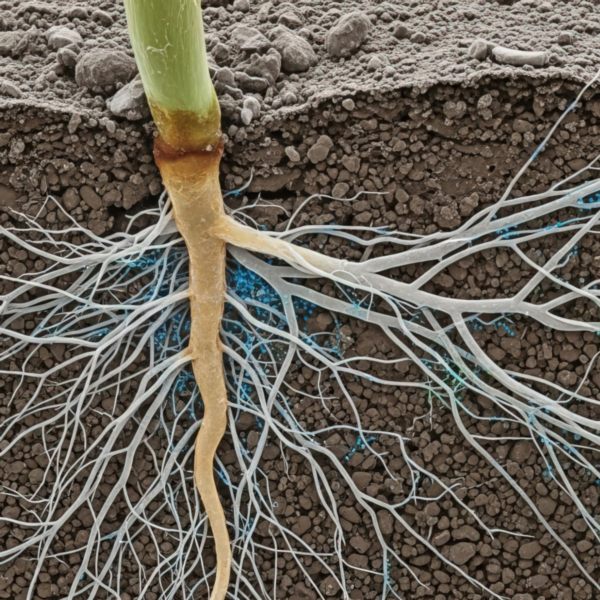
The study maps the global distribution of arbuscular mycorrhizal fungi, which are microscopic organisms that form partnerships with the roots of most land plants. These fungi extend beyond plant roots into surrounding soil, helping plants absorb water and nutrients while receiving carbon produced by plants through photosynthesis.
Researchers estimate that Earth’s topsoil contains around 110 quadrillion kilometres of fungal filaments, underlining the vast scale of these largely unseen systems. The study also suggests that these fungi transfer 3.12 billion tonnes of carbon dioxide from plants into the soil each year, making them an important component of the global carbon cycle.
The findings challenge a traditional focus on trees and forests by highlighting the importance of grasslands, wetlands and other non-forest landscapes. These environments, which often fall within local authority management or planning boundaries, store significant amounts of carbon below ground, supported by extensive fungal networks.
The research also raises concerns over the impact of intensive land use. Agricultural practices such as heavy fertiliser use and soil disturbance were found to reduce fungal abundance and diversity, potentially weakening soil health and increasing reliance on external inputs. By extending plant root systems into the surrounding ground, arbuscular mycorrhizal fungi play an important role in supporting more sustainable forms of agriculture.
As arbuscular mycorrhizal fungi extend plant root systems into the surrounding soil, they play an important role in supporting more sustainable forms of agriculture.
For local authorities, the findings reinforce the importance of soil management in climate and sustainability strategies. Protecting green spaces, supporting sustainable farming practices and land management, and considering soil health in planning and land use decisions could help preserve these underground systems and their wider environmental benefits.
The study also highlights the need for greater recognition of soil ecosystems within policy frameworks, particularly in relation to carbon storage, biodiversity and resilience to climate change.
Promoting excellence in public services
APSE (Association for Public Service Excellence) is a not for profit unincorporated association working with over 300 councils throughout the UK. Promoting excellence in public services, APSE is the foremost specialist in local authority frontline services, hosting a network for frontline service providers in areas such as waste and refuse collection, parks and environmental services, cemeteries and crematorium, environmental health, leisure, school meals, cleaning, housing and building maintenance.
.png)


.png)


