


Derby's award winning School Safe Haven Zones

Fresh from winning the MJ Achievement Award for Best Council Services Team, Rob Shoebridge, Group Manager, and Kerry Griffiths, Digital Enforcement Manager, Derby City Council, reflect on building a showcase traffic safety scheme.
Derby’s years-long journey began in 2019 with the concept of School Safe Haven Zones. The council was receiving complaints about vehicles parking on the yellow zigzag lines outside schools, which are meant to serve as crossing points for children. However, the traffic and transport team found that they did not have the resources to enforce the rule effectively; they had access to a couple of ‘camera cars’ – but these could only cover a very limited number of areas, and in-person, staff monitoring often faced non-compliance from parents, and in some cases, aggression or abuse, which was ineffective and unsustainable.
This presented an issue, as, except for enforcement officers or camera cars, there was no other method or technology available to enforce the zigzags. Seeking a new solution, Rob and Kerry worked with SEA (now Intelliscape) to implement a new traffic management system, the ROADflow attended camera, which would be placed outside schools to enforce the regulations.
“When we first presented the idea, we were laughed at. People said, “You’ll never get a camera outside schools, parents and councillors won’t accept it”, said Kerry.
Privacy was a huge concern, especially due to the presence of children – the team had to work through complex GDPR issues with the council’s information governance advisors. To make them compliant, the camera had ‘privacy filters’ included, so officers could only zoom in and view the road and yellow zigzags, just enough to see if a contravention was occurring. The introduction of the cameras was very transparent, with letters hand delivered to residents explaining the reason for the cameras, as well as the fact that they would only be operated during school times.
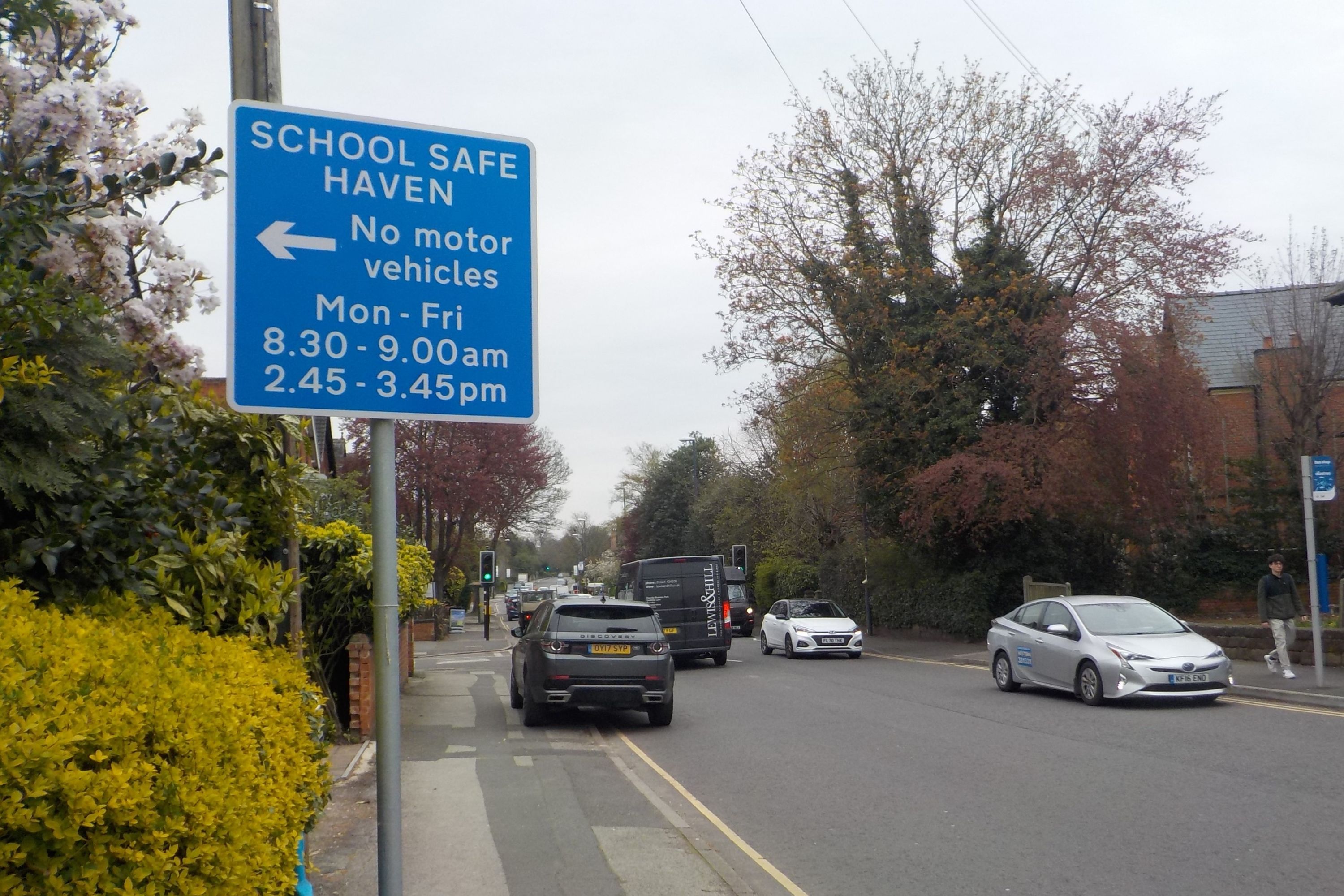
The impact of introducing the cameras was far greater than the team could have predicted.
“It wasn’t just enforcement. Parents stopped parking at school gates. The air was cleaner. Children crossed more safely. The camera presence reduced anti-social behaviour - people didn’t know exactly what it captured. That’s why we called it a Safe Haven”, said Rob.
“We began with four cameras. By the end of 2020, despite Covid, we had 22. Schools wanted them. Councillors liked them because complaints dropped. And it wasn’t displacing parking ,vehicles shouldn’t have been there in the first place”, he added.
In 2021, the introduction of moving traffic enforcement powers for councils in England was on the horizon. Previously, apart from London Boroughs, moving traffic offences were only enforceable by the police – with the new powers, the team saw an opportunity.
Working at pace, the team began a public consultation, engaging local communities and identifying potential sites to employ the new powers. Rob explained how a model of evidence-based enforcement was planned, one that was “justified and proportionate” with sites carefully selected by traffic engineers based on data.
On 23 September 2022, Derby City Council became the first authority outside of London and Wales to use the new powers in earnest. The School Streets initiative – initially beginning with six schools – meant that entire streets could be kept clear at drop-off and pick-up times, rather than just enforcing the zig-zag lines. This encouraged walking, cycling, and scooting, improved air quality, reduced idling, and gave residents their streets back.
“Other councils have tried school streets, but without moving traffic enforcement powers, they’re less effective. Police don’t have the capacity to enforce”, Rob explained.
“Our advice: enforcement powers are essential. For the first six months, we only issue warnings. That changed 88% of behaviour without penalties. Only 12% reoffended. This isn’t about making money, it’s about behaviour change.”
Income that has been generated through fines is reinvested into the project and other related services, including cycle training for school children and school crossing patrol teams.
With an increase in demand and interest for SSHZs from schools and parents alike, the council successfully bid for funding from Active Travel England to implement six additional locations. Due to the level of interest from schools across the area, the team had to build an implementation criteria, looking at traffic levels, resident access, current measures and work already done by schools to reduce levels of traffic – Rob pointed out that, in some cases, Schools trying to achieve the criteria introduced their own measures which is making a real difference, even before the introduction of enforcement cameras.
Feedback from teachers whose schools qualified for an SSHZ said that children were arriving more alert, ready to learn, and more social because they had walked in a group rather than being driven. Working parents benefited too, with ‘crocodile walks’ – walking buses – being introduced with a volunteer parent collecting children on a route to school. And with more attention being paid to the health impacts of vehicle emissions in recent years – especially amongst children – the initiative has had a clear impact on levels of Nitrogen Dioxide around participating schools, with levels nearly halving in some cases.
As ‘first movers’ in using moving traffic enforcement powers, the team was asked to present nationally, even being used as a best practice case study by the Department for Transport and Active Travel England. Seeking to help other local authorities, the team now supplies and installs cameras across the UK, including Walsall, Coventry, Hull, and Cheshire East – trading under the Localism Act.
On why the SSHZ team has been so successful, both Rob and Kerry agreed that a mix of personality, creativity, and the council’s culture. They cited support from Derby’s leadership as crucial, in particular the then Deputy Chief Executive Rachel North, who told them to “seek forgiveness, not permission”, giving them the freedom to push boundaries. Rob, a former referee, explained a sports-like mentality of seeking marginal gains and 1% improvements by empowering staff to suggest ideas, further motivating the team to strive for the best possible results.
“Because we’re a council, we understand the same challenges other councils face - procurement, revenue, complaints. Private companies would charge far more. We’re here to provide a service, not make a profit”, he said.
“That culture of innovation, plus the results, has allowed us to build something unique and valuable for the council and community.”

Promoting excellence in public services
APSE (Association for Public Service Excellence) is a not for profit unincorporated association working with over 300 councils throughout the UK. Promoting excellence in public services, APSE is the foremost specialist in local authority frontline services, hosting a network for frontline service providers in areas such as waste and refuse collection, parks and environmental services, cemeteries and crematorium, environmental health, leisure, school meals, cleaning, housing and building maintenance.
.png)


.png)


